

National Palliative Care Week 2023 - 'Matters of Life and Death'
National Palliative Care Week 2023 - 'Matters of Life and Death'
Friday, March 17, 2023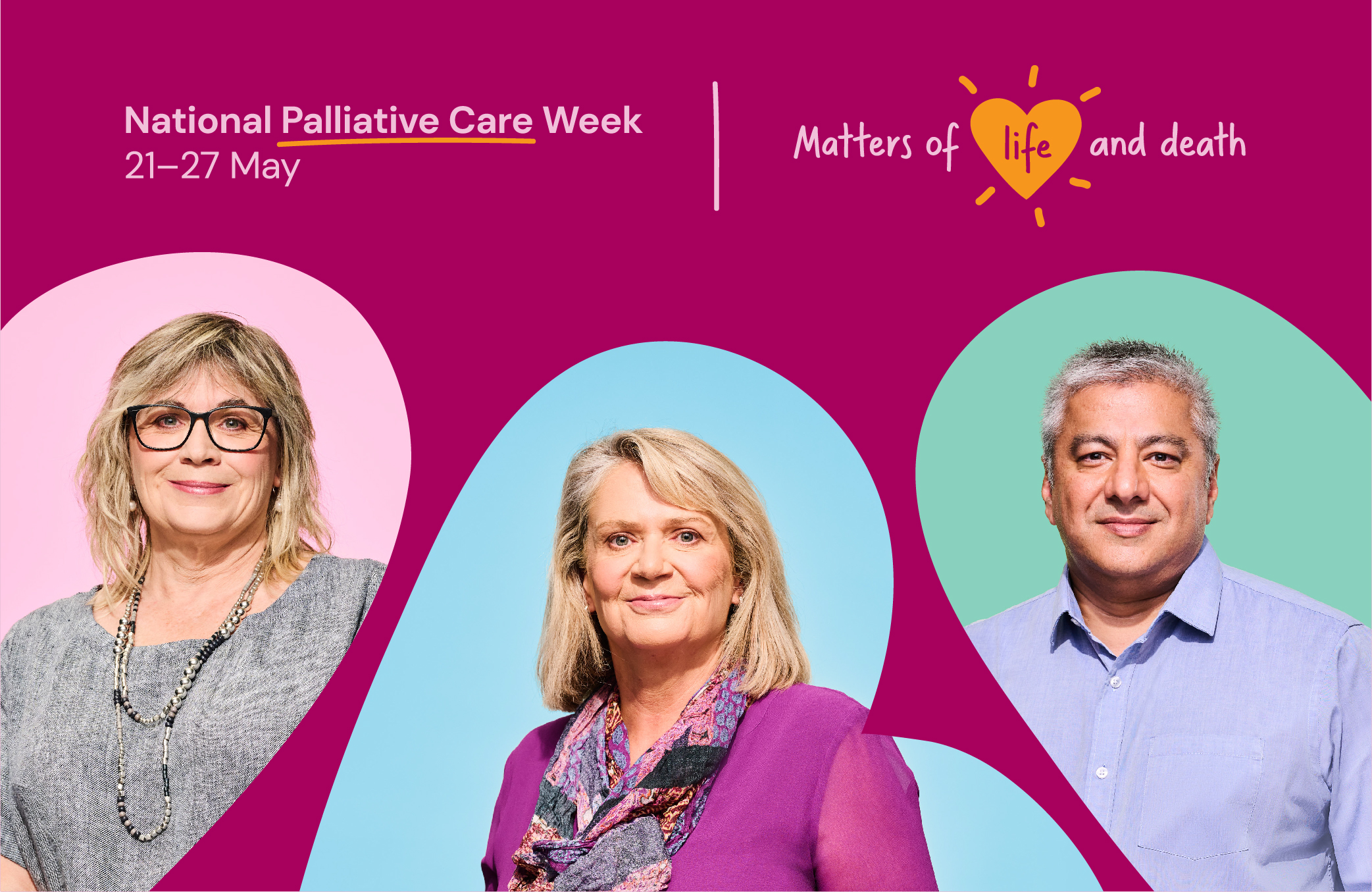
National Palliative Care Week runs, 21 May to 27 May 2023 and aims to put ‘Matters of Life and Death’ front and centre in Australia’s consciousness. Camilla Rowland, Chief Executive Officer at Palliative Care Australia (PCA) says, “We understand that death and dying is a difficult subject to talk about and engage with, but this year we have some powerful voices joining the campaign to inspire and start important conversations.”
“The ‘people at the heart of quality palliative care’ – our workforce and volunteers, have opened their hearts to share the life lessons they learn everyday as they provide care and support to people and families living with a life limiting illness.
“The vibrant video and social media campaign that is central to the week will also allow us all to show our appreciation for the doctors, nurses, physios, social workers, occupational therapists, dietitians, volunteers and the many others who contribute to the person-centred team approach to palliative care.”
Adding further weight to our message is the world premiere of ‘Live the life you please’, a powerful documentary produced by Moonshine Agency. The film delves into the stories of real people from across the country, sharing their personal experiences of palliative care. The film will make you smile, laugh, laugh harder and occasionally shed a tear as this diverse range of Australians share the last chapter of their life with us.
“National Palliative Care Week and the stories we’ll share will open the door on the full scope and impact of palliative care and the quality of life it delivers. I hope it provides a moment of reflection for all Australians to think about and plan for the last chapter of life,” Ms Rowland says.
Film screenings and a host of other events will make for a busy NPCW around the country. A full list of events can be found below as well as a range tools to help grow awareness of palliative care. Getting involved and showing your support for palliative care and the people who deliver it is as easy as sharing your story on social media using #MattersOfLifeAndDeath.
“Whether you are receiving palliative care, looking after someone or know someone who is receiving care, we encourage you to share your experience and break down those taboos,” Ms Rowland says. The advice, tools, and support below have been pulled together to support those working and volunteering in palliative care and help anyone and everyone better understand palliative care and how to access it.
You will also find some great resources to start end-of-life conversations and record those wishes and plans. Please make the most of the communication and marketing assets below to show your support and help amplify the message.
Thanks again, got a question? Email pca@palliativecare.org.au
See what's happening in your state or territory
 |
 |
 |
 |
 |
 |
 |
 |
National movie screenings

Advice for you
 |
 |
 |
 |
Other advice, tools and support
- Understanding self-care
- Planning for self-care
- Self-Care Matters campaign resources – a Palliative Care Australia resource, which aims to support you – whatever your role in palliative care – to prevent burnout and build resilience
- Self-care for volunteers working in paediatric palliative care
- Self-care for health professionals working in paediatric palliative care
- Questions for carers to ask the team caring for your loved one
- The Essence of Spiritual Care: A learning module for health care workers
- End of Life Directions for Aged Care (ELDAC) Toolkits – designed to help you in providing palliative care and advance care planning to older Australians
- National Palliative Care Standards for Specialist Palliative Care Services
- National Palliative Care Standards for All Health Professionals and Aged Care Services
- CareSearch Health Professionals Centre – providing trustworthy and practical resources that are relevant to your practice
- End-of-Life Essentials: free education modules and resources
- Palliative Care Online Short Courses, Flinders University
- Oceanic Palliative Care Conference, Sydney, September 2023
- Free PCA shop
- Palliative care NSW – Homelessness and Palliative Care Report
- Department of Health and Aged Care – Exploratory Analysis of Barriers to Palliative Care – Issues Report on People Experiencing Homelessness
- CareSearch: palliative care issues for people experiencing homelessness
- Palliative Care Australia – Providing palliative care for people who are homeless; attempting to break down barriers
- Homeless Palliative Care Toolkit
 |
 |
 |
 |
 |
 |
 |
 |
 |
 |
Quick links to more info
 |
 |
 |
 |
 |
 |
Join the conversation

You heard Hsien, don’t miss this opportunity to discuss “The Future of Caring.”
Led by global palliative care expert, Prof Hsien Seow, this exclusive symposium will unpack how greater collaboration between health systems and local communities can address the care needs of the future in Australia.
🗓️ Date: Thursday, 14 November 2024
📍 Location: Rydges Sydney Central (online attendance available)
🕒 Time: 2-6pm AEDT
💲Cost: $65 – $85 (excluding GST) includes refreshments
➡️ Register: https://ow.ly/fxkE50TMkle
Thank you to our partners in this – UTS: University of Technology Sydney, Palliative Care NSW, and Waiting Room Revolution.

⚠️NDIS reform brings clarity for people at the end of life.
“Prior to the rule change there was ambiguity, which left NDIS participants who are dying, in the middle of a funding battle between the NDIS and state and territory health systems, which too often left people without any funded support for their disability-related needs,” says Camilla Rowland, PCA, CEO.
“We are delighted that the recommendations in our recent submission to the NDIS supports review have been actioned.”
While this is welcome reform, gaps still remain for many people when it comes to accessing timely care and support, more ➡️ https://ow.ly/zsBi50TQkn4

🧡 New director appointed to PCA Board.
“Sarah is a welcome addition to our ranks, she is currently working at EPC – Eastern Palliative Care in Victoria but comes with 12 years of community palliative care experience across Australia, including roles in rural NSW and Far North Queensland, not to forget her involvement with Australasian Palliative Link International and Palliative Care Nurses Australia Inc.,” says Prof Meera Agar, PCA Chair.
Full wrap up of AGM including Annual Report ➡️ https://ow.ly/8Ckw50TPn4M

👨🎓👩🎓 eLearning course builds better communication at the end-of-life in paediatrics!
“Bereaved parents co-designed this course with us sharing their experiences and wisdom – speaking into a future where our communication is better,” says Sara Fleming, Senior Clinical Project Officer, PCA.
The Paediatric End-of-Life Care Communication modules are available free via the new Paediatric Palliative Care Education Hub and have been written for health care professionals who provide varied levels of care.
Explore and start learning ➡️ https://ow.ly/f4BJ50QOnen
Share with someone you know!

When her mother was diagnosed with terminal cancer, Jan McGregor quickly recognised the shortfall in the care her mother was receiving – far removed from what she believes a ‘good death’ should be.
Heartbroken at the thought of her mother’s life ending this way, Jan made the decision to bring her home, where she personally cared for her during her final days. Though challenging, Jan says caring for her mother through death was a “deeply rewarding experience.”
It’s an experience that has shaped Jan’s drive to establish Pure Land of Amitabha Buddha Hospice in South Australia. This latest instalment in our People of Palliative Care series is a tribute to the roll community can play in the delivery of palliative care, read on ➡️ https://ow.ly/V0NS50TO2qq

During National Carers Week, we are keen to highlight some great new resources from our friends at CarerHelp, to support the important work of those looking after loved ones approaching the end of their life.
Order your free printed copies now ➡️ https://ow.ly/CEAj50TNhV6
#NationalCarersWeek Carers Australia, #CarerHelp


